%2520(1).jpeg)
.webp)
When most or all teeth are no longer salvageable, the conversation quickly becomes emotional. Patients worry about how they will look, speak, and function. Full mouth dentures remain one of the most reliable ways to restore function, appearance, and confidence.
This guide gives clinicians a chairside ready overview of the main denture types, how materials behave in real mouths, how to manage full mouth dentures extraction with immediate dentures, and practical ways to set expectations so patients are prepared for the adaptation period.
TL;DR:
- “Full mouth dentures” or complete dentures restore an entire arch when natural teeth are no longer viable.
- Choice of denture type (conventional, immediate, implant retained, digital) depends on bone, budget, and patient goals.
- Material choices affect fracture risk, aesthetics, and chairside adjustments; high impact acrylic and CAD/CAM workflows are raising the baseline.
- Full mouth dentures extraction with immediate dentures protects aesthetics and psychology but demands honest counselling about fit changes and relines.
- Thorough pre op records and detailed lab prescriptions dramatically cut remakes and post insertion visits.
What are full mouth dentures?
Full mouth dentures are complete dentures that replace all teeth in an upper and/or lower arch. Where partial dentures share the stage with remaining teeth, complete dentures rely entirely on the supporting tissues and, in many cases, on implants for stability.
Clinically, these cases usually sit at the end of a long road of recurrent decay, periodontitis, or heavily restored dentitions that are no longer serviceable. The discussion is rarely purely technical; patients are weighing:
- Function (chewing confidence, speech)
- Aesthetics (lip support, smile line, tooth form and shade)
- Time without teeth, especially around work or social events
- Finances, including staged options like overdentures
A clear explanation of options and a lab that can support everything from conventional acrylic to digital removable dentures and implant solutions helps patients feel less like they are stepping off a cliff.
Types of full arch denture options
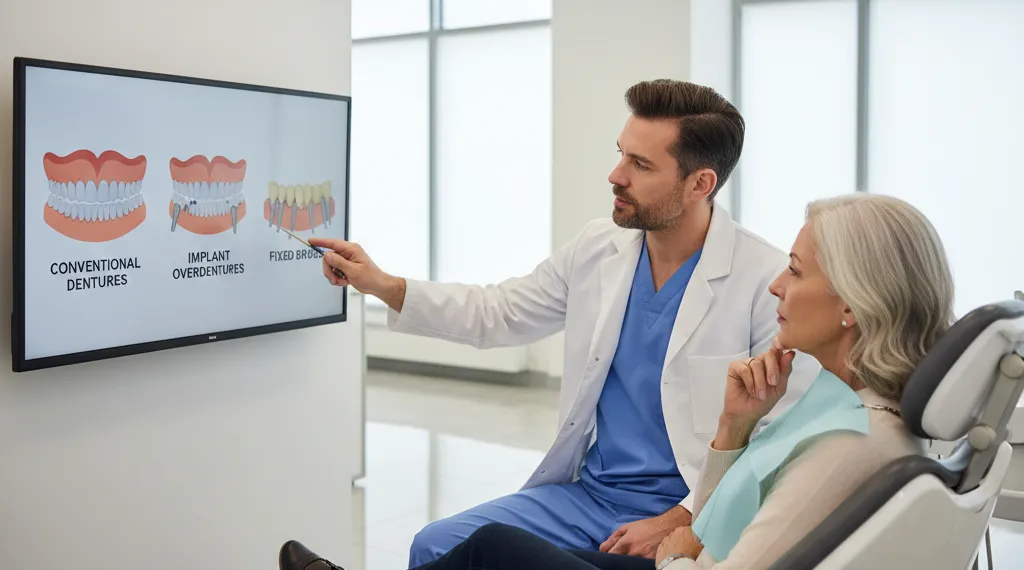
Patients often choose between tissue supported dentures, implant retained overdentures, and fixed full arch bridges.
1. Conventional complete dentures
These are fabricated after extractions and initial healing, once alveolar remodelling has settled enough to capture a stable ridge form. Conventional complete dentures remain the workhorse option where cost is a major factor and implants are not planned.
Advantages include lower initial cost and fewer early relines. The main trade off is an edentulous period, which some patients find unacceptable for social or psychological reasons.
2. Immediate dentures
Immediate dentures are inserted on the same day the remaining teeth are removed, so the patient is never without teeth. For many, this is the deciding factor.
The challenge is that healing alters the ridge quickly. Fit typically deteriorates, and temporary soft liners plus later relines or remakes are expected. Setting this expectation clearly ideally in writing keeps trust intact.
Digital workflows and pre op scans allow you and your lab to plan immediate setups more predictably. NovaDent can work from intraoral scans or conventional impressions to design immediate dentures in CAD and mill or print bases with a consistent vertical dimension of occlusion (VDO).
3. Implant retained overdentures
Where bone volume and budget allow, mandibular overdentures on two to four implants significantly improve stability, chewing efficiency, and patient satisfaction compared with tissue supported lowers alone. Maxillary overdentures can also reduce palatal coverage for patients who dislike a full palate.
These cases benefit from tight lab clinic communication about attachment systems, space requirements, and framework design. Our implant restoration services support both locator style and bar supported overdentures with CAD/CAM frameworks.
4. Fixed full arch prostheses on implants
Full arch, screw retained bridges on multiple implants (often acrylic or composite on a milled bar, or monolithic zirconia) sit beyond conventional dentures but are part of the same treatment conversation.
Many practices present a spectrum: tissue supported dentures → implant retained overdentures → fixed full arch bridges. Being explicit about pros, limitations, and maintenance at each step helps patients choose a biologically and financially suitable path. For a deeper comparison of fixed full arch implant options, you can pair this article with our guide on All On 4 dental implants.
| Option | Typical indications | Main advantages | Key limitations | Maintenance considerations |
|---|---|---|---|---|
| Conventional complete dentures | Healed ridges where cost is critical and implants are not planned. | Lower upfront cost, fewer early relines, straightforward to repair. | Requires an edentulous period; stability can be limited on atrophic ridges. | Periodic adjustment, monitoring for ridge resorption, relines or remakes over time. |
| Immediate dentures | Patients unwilling to be without teeth during extraction and healing. | No “toothless” phase protects appearance and psychology at transition. | Rapid fit changes, higher likelihood of early soreness and looseness. | Planned soft liners, interim relines, and possible definitive reline or remake. |
| Implant retained overdentures | Reduced mandibular stability or desire for more secure, removable prosthesis. | Improved retention and chewing efficiency, often with reduced palatal coverage. | Requires surgery, sufficient bone, and additional cost; attachment wear over time. | Attachment maintenance, periodic replacement of components, hygiene around implants. |
| Fixed full arch prostheses on implants | Patients seeking maximum stability and fixed function with suitable anatomy. | High stability, improved biting efficiency, no daily removal by the patient. | Greatest cost and surgical commitment; access and hygiene can be more demanding. | Regular reviews, professional cleaning, screw checks, and potential prosthetic repairs. |
Common denture materials and their trade offs
Material choice feels routine until you meet recurrent fractures or high demand aesthetic cases. A quick recap helps match material to mouth.
1. Denture base materials
- Conventional heat cured acrylic (PMMA): Longstanding standard; repairable, polishable, and economical. Suitable for most routine complete dentures.
- High impact acrylics: Tougher and more fracture resistant; helpful with reduced vertical space, parafunction, or a history of midline fractures.
- Metal reinforced acrylic: A cobalt chrome framework or mesh can add strength in thin areas or horseshoe designs (for example, palateless maxillary dentures).
- Flexible base resins: Nylon based materials have a place in some partials and special situations but are less common for full arches due to adjustment and repair limitations.
- CAD/CAM milled or printed bases: Digitally produced bases offer consistent fit and fewer porosities. Once a digital record is validated, remakes and spare sets become straightforward.
2. Denture teeth materials
- Acrylic teeth: Bond well to acrylic bases, kinder to opposing dentition and restorations, and straightforward to adjust and polish.
- Composite or nano hybrid teeth: Improved wear resistance and surface lustre, useful when aesthetics and gloss retention matter.
- Porcelain teeth: Hard wearing and stain resistant but heavier and less forgiving on opposing dentition; repairs and bonding to bases can be more demanding.
When you brief your lab, a short note about parafunction, opposing restoration type, and aesthetic expectations helps steer material selection, even within a standard digital denture workflow.
Full mouth extraction with immediate dentures
Full mouth extraction with immediate dentures can be life changing for patients who are anxious about being toothless, even briefly. It is also the scenario most likely to test your communication skills.

A clear staged plan for immediate dentures helps patients understand healing, relines, and the timing of any remake.
1. Case selection and planning
Ideal candidates are healthy enough for multiple extractions, have realistic expectations, and understand the staged nature of fit and aesthetics. Heavy smokers, poorly controlled systemic disease, or patients with very limited follow up access may warrant a modified plan.
2. Pre extraction records
The quality of the immediate denture largely depends on the quality of pre op records. At minimum:
- Primary impressions or intraoral scans capturing vestibular depth and functional borders where possible
- Bite registration in a comfortable centric relation and agreed VDO
- Shade, mould, and phonetic considerations documented (photos are invaluable)
- Clear markings of teeth to be extracted, especially if some are being retained temporarily
Digital photos and scans also help with future implant planning, mapping the pre extraction smile line and lip support against proposed implant positions.
3. Healing, relines, and remakes
Patients often hear that “your gums will shrink” but rarely understand how quickly things change. A simple staged plan can help:
- Initial healing with soft liners and frequent adjustments for sore spots
- Interim soft or hard reline once healing stabilises
- Definitive reline or remake at 6–12 months, depending on resorption and wear
Staged plan for full mouth extraction with immediate dentures: initial healing → interim relines → definitive reline or remake.
Micro case: setting expectations to avoid remakes
In one representative case, a 60 year old teacher with terminal dentition wanted to avoid any time without teeth and was highly anxious about appearance. The clinician and lab planned immediate dentures based on detailed pre extraction records and documented a staged pathway: soft liners for 8 weeks, an interim hard reline at 4 months, then review for a possible remake at 9–12 months. Because this plan and timeline were explained and agreed before surgery, the patient accepted early looseness as expected, attended reviews, and was satisfied after a single planned reline with no remakes required.
Written handouts plus links to reputable patient resources such as the Australian Dental Association dentures guide and national sites like the Healthdirect dentures overview reinforce the messages you give chairside.
Clinical & lab workflow for predictable cases
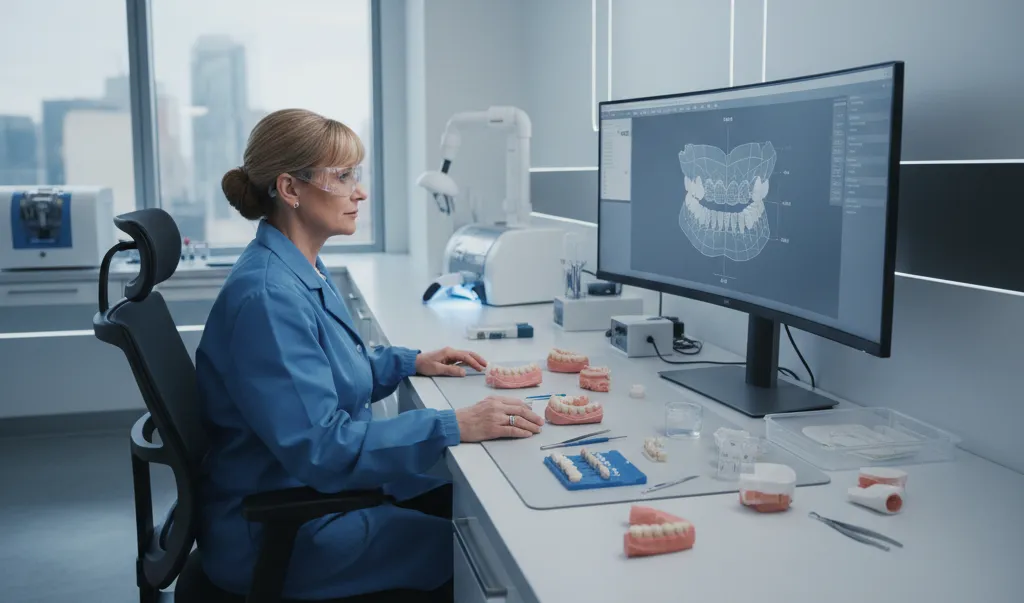
Close collaboration with a digital ready lab supports more consistent, repeatable full mouth dentures outcomes.
When full arch cases go wrong, the pattern is familiar: rushed records, vague prescriptions, and misaligned expectations. A simple, repeatable workflow reduces that risk.
Stepwise overview
- Comprehensive assessment & case presentation
Chart existing teeth, periodontal status, occlusal scheme, and TMJ symptoms. Present options from tissue supported dentures through to implants, using visual aids and written quotes. - Preliminary impressions or scans
Capture anatomy with stock trays or digital scans. For conventional techniques, the lab can fabricate custom trays to refine border extensions. - Definitive records
Take secondary impressions, jaw relation records, and facebow if used. Document midline, smile line, and desired tooth display at rest and on smiling, plus a quick set of photos from standardised angles. - Wax try in or digital try in
Review a traditional wax trial denture or a 3D printed prototype to confirm VDO, occlusion, and aesthetics before final processing. - Insertion & adjustment
Check extension, pressure areas, occlusion in centric and excursions, and phonetics. Explain that further adjustments are normal, especially in the first fortnight. - Review & maintenance
Short term reviews for sore spots, and longer term reviews for occlusal wear, ridge changes, and hygiene reinforcement. This is also when you can revisit implant options with suitable patients.
Clear prescriptions and photos give your lab the context it needs to support each step. At NovaDent, we encourage clinicians to reach out for case planning, especially on combined denture and implant cases where long term strategy matters.
What patients should realistically expect
Most complaints about complete dentures come from a gap between expectations and reality. A few honest, preemptive explanations can prevent a lot of after hours phone calls.
1. The first days to weeks
- Speech: Temporary lisping or altered sounds, especially with maxillary dentures.
- Chewing: Need to start with softer foods and cut food into smaller pieces.
- Soreness: Localised sore spots that usually respond to selective adjustments.
- Saliva changes: Often an increase at first, then normalisation.
2. Medium term adaptation
Over the following months, neuromuscular adaptation improves control, though lower dentures may remain a challenge on atrophic ridges. Where anatomy and finances allow, this is when some patients are ready to consider an overdenture or fixed option for added stability.
3. Long term maintenance
- Regular reviews for fit, tissue health, and oral cancer screening. Organisations such as the Oral Health Foundation denture guidelines emphasise the need for ongoing professional checks.
- Instruction on cleaning routines (non‑abrasive cleaners, avoiding hot water, removing dentures overnight unless contraindicated). Patient facing resources like the Better Health Channel dentures fact sheet can be useful take home reading.
- Discussion of adhesives as a supplement, not a fix for poor fit and the value of relines when looseness develops.
A simple line that works well: “These dentures will look like teeth from day one, but they won’t feel like your own teeth from day one. That comfort comes with time, adjustments, and sometimes with implants.”
FAQs
Is full mouth extraction with immediate dentures right for every patient?
No. It works best for motivated patients who understand there will be a transition period, multiple visits, and future relines or remakes. Patients with limited follow up access, complex medical histories, or very unrealistic expectations may be better served with a modified or staged approach.
How long do complete dentures usually last?
Wear, fracture risk, and ridge resorption vary, but many clinicians review for replacement or major revision around the 5–8 year mark. Heavy parafunction, significant anatomical changes, or material fractures can shorten that timeline.
When should I recommend an implant retained overdenture?
Consider an overdenture when lower denture instability is affecting quality of life despite reasonable anatomy and technique, or when a patient is already investing in extractions and wants a more stable long term solution without committing to fixed full arch work.
Can digital dentures really reduce chairside time?
In many cases, yes. Consistent fit, the ability to duplicate a successful design, and smoother occlusal schemes can all reduce adjustment visits. The biggest gain is repeatability: once a digital design is validated, remakes, spare sets, and future modifications become faster and more predictable through a trusted digital lab partner.
How much do full mouth dentures cost in Australia?
Full mouth dentures cost in Australia typically ranges from $2,000 to $8,000 or more depending on the materials used, the complexity of the case, and whether conventional or implant supported dentures are chosen.
What factors affect the cost of full mouth dentures?
The cost of full mouth dentures depends on the denture material, customization level, dental laboratory quality, and additional treatments such as tooth extractions or implant placement.
Related Posts
You may also be interested in

Dental Implant Care: The Tooth May Be Artificial, But the Care Is Real
TMJ Splint vs Night Guard: What’s the Difference?
How to Clean a Mouth Guard Properly Without Damaging It

NovaDent Has Arrived.
Previously VTS Dental Labs.
Same team
Same standards
New identity
Visit our new website